

About

Examining a patient without surgery during diagnosis, treatment and follow-up. X-ray computed tomography (CT) is cost-effective and easy to use. However, the contrast is low because the radiation dose needs to be kept as small as possible. MRI has better soft-tissue contrast, but requires much longer scan times. PET can produce functional images, but is more expensive. The ultimate solution is at hand: photon-counting computed tomography (PCCT), also known as color CT. This solution will result in better images with lower X-ray dose, for medical, security, testing and quality-control purposes.
QuPIX – Where Quantum Meets Clarity
Examining a patient without surgery during diagnosis, treatment and follow-up. X-ray computed tomography (CT) is cost-effective and easy to use. However, the contrast is low because the radiation dose needs to be kept as small as possible. MRI has better soft-tissue contrast, but requires much longer scan times. PET can produce functional images, but is more expensive. The ultimate solution is at hand: photon-counting computed tomography (PCCT), also known as color CT. This solution will result in better images with lower X-ray dose, for medical, security, testing and quality-control purposes.
TU Delft in the Lead
Quantum-enhanced Perovskite (QuPS) crystal scintillators for Innovative X-ray photon-counting in medical imaging and other applications (QuPIX) is a 4-year European funded EIC Pathfinder Open project. QuPIX aims to unlock the full potential of colour CT by developing and validating a novel X-ray photon-counting detector technology based on quantum-enhanced scintillators and micro-avalanche photodiodes, striving at a breakthrough in detector technology and offering better diagnostic accuracy, and new opportunities for clinical and industrial applications.
The project is coordinated by Dennis Schaart from the TU Delft Radiation Science & Technology department, in collaboration with European academic and industry experts in materials science, photosensors, and radiation imaging, from Accent Pro 2000 Srl, Fondazione Bruno Kessler (FBK), Sieć Badawcza Łukasiewicz – PORT Polski Ośrodek Rozwoju Technologii, Université Claude Bernard Lyon 1, Centre National De La Recherche Scientifique (CNRS).
“The clinical benefits of spectral PCCT were theoretically predicted over 50 years ago. Today, the first colour CT scanners have been developed, and physicians praise the diagnostic clarity they provide. Unfortunately, these devices are very expensive, and their spectral capabilities are still limited. QuPIX is set to close that gap — advancing performance and affordability to bring colour CT into everyday care.”
Next-Level X-Ray
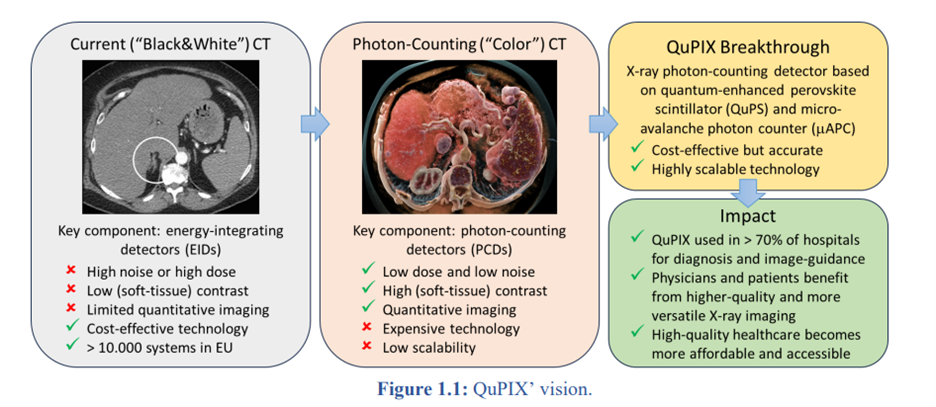
PCCT represents the next leap in (medical) X-ray imaging. It delivers images with astonishing contrast and resolution, while lowering the X-ray dose received by the patient. Moreover, the spectral capabilities of PCCT (also called “color” CT) enable quantitative imaging functions, such as measuring tissue composition or the concentration of contrast agents. Unfortunately, widespread clinical use of PCCT is still hampered by the high cost and technical limitations of current X-ray photon-counting detectors.
By combining recent scientific discoveries, such as QuPS and micro-avalanche photon counters (μAPC), with proven X-ray methods QuPIX aims to bring medical imaging to the next level and deliver a new, affordable, and scalable X-ray photon counting imaging technology.
The Challenge
PCCT represents the next major leap in X-ray imaging technology. It enables images with exceptionally high contrast, spatial resolution, and low noise, while reducing radiation dose compared to conventional CT systems.
A unique advantage of PCCT is its spectral (or “color”) imaging capability, allowing quantitative assessment of tissue composition and contrast agent concentration. Despite its promise, widespread clinical adoption of PCCT remains limited due to the high cost of current scanners and the insufficient accuracy of existing detector technology.
Our Approach
The QuPIX project aims to unlock the full clinical potential of color CT by developing a new, affordable, and scalable detector based on QuPS and μAPC. This innovative approach addresses key challenges related to light yield, energy resolution, decay time, and X-ray stopping power, ensuring optimal performance for next-generation imaging systems.
The project will design and validate a laboratory-scale prototype, laying the groundwork for future commercial deployment of QuPIX-based imaging technologies in medical and non-medical markets (such as security screening).
Expected Impact
By combining multidisciplinary expertise with breakthrough materials science, QuPIX will revolutionize medical imaging, strengthen Europe's leadership in color CT technology, and ultimately improve the quality and accessibility of healthcare through faster and more accurate diagnosis.
What We Do
Project Objectives
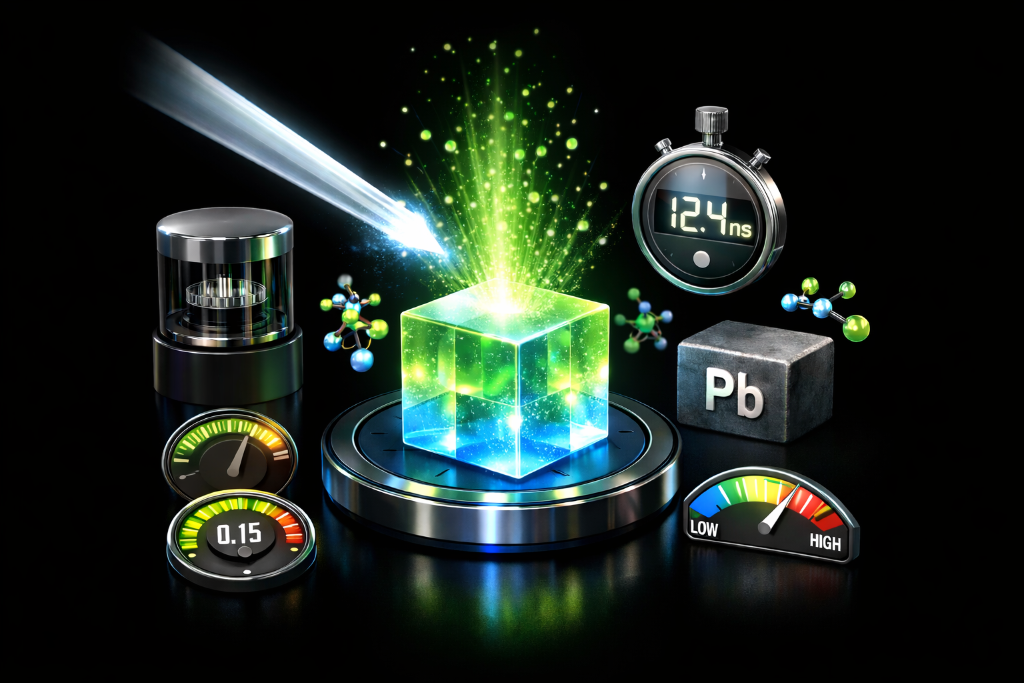
Quantum-Enhanced Scintillators
Design and synthesize novel quantum-enhanced perovskite scintillators with optimized light yield, energy resolution, decay time, and X-ray stopping power.

Micro-Avalanche Photon Counters
Develop micro-avalanche photon counters optimized for coupling with quantum enhanced perovskite scintillators for superior detection performance.
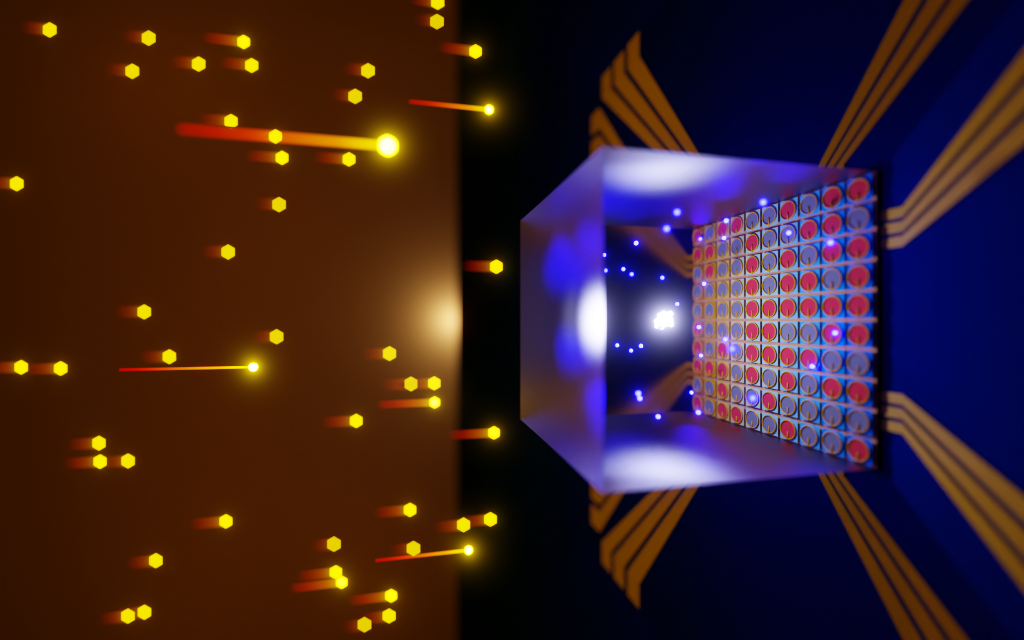
Laboratory Prototype
Design and validate a laboratory-scale photon-counting detector prototype demonstrating the QuPIX technology concept.

Medical Imaging Applications
Address key challenges in photon-counting computed tomography to improve diagnostic quality and reduce radiation dose.

Security & Beyond
Lay the groundwork for deploying QuPIX-based imaging technologies in non-medical markets such as security screening.

European Leadership
Strengthen Europe's leadership in photon-counting detector technology and ultimately improve the quality and accessibility of healthcare.
More Information
Contact
Project Coordinator
Dennis Schaart
TU Delft – Radiation Science & Technology

